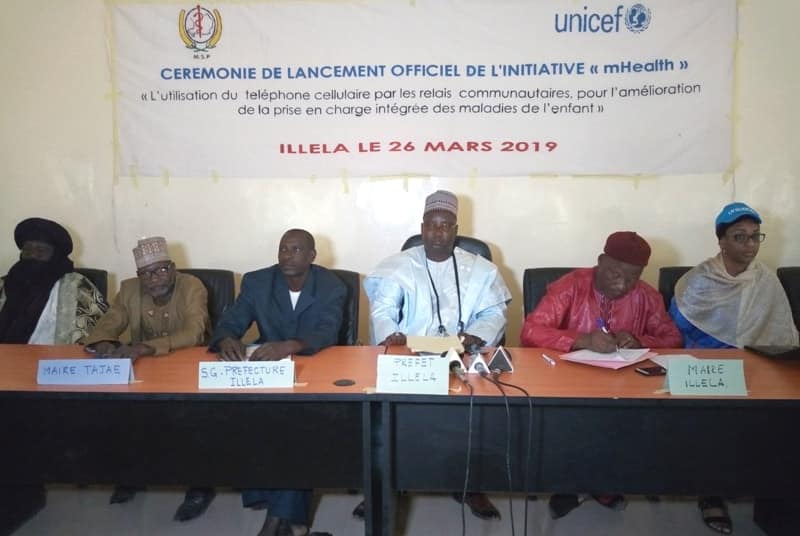
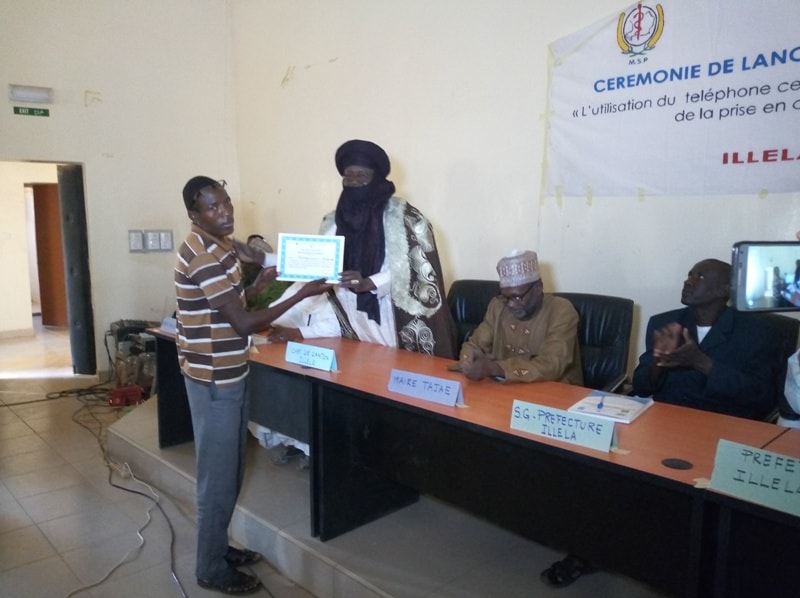
Technological innovation in the service of health, particularly children's health, is taking its first steps in Niger. On Tuesday 26 March, the town of Illéla in the Tahoua region hosted the official launch of the "mobile for Health" (mHealth) initiative, an innovative service for treating sick children using mobile phones.
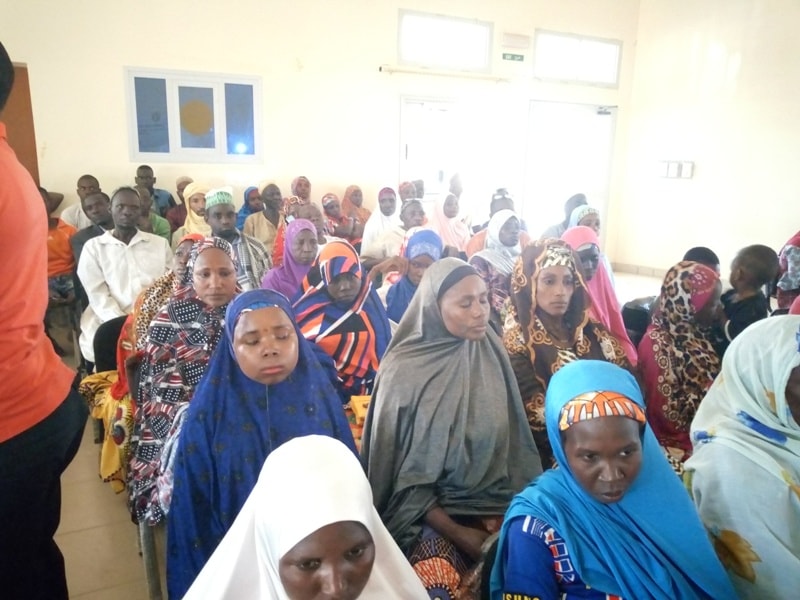
The colourful ceremony to launch the initiative was attended by representatives of the Ministry of Public Health, UNICEF's resident representative in Niger, the administrative and traditional authorities of the departments of Illéla and Badaguichiri and the commune of Tajaé, as well as the beneficiaries who turned out in force to attend the event.
Technological innovation for children's health
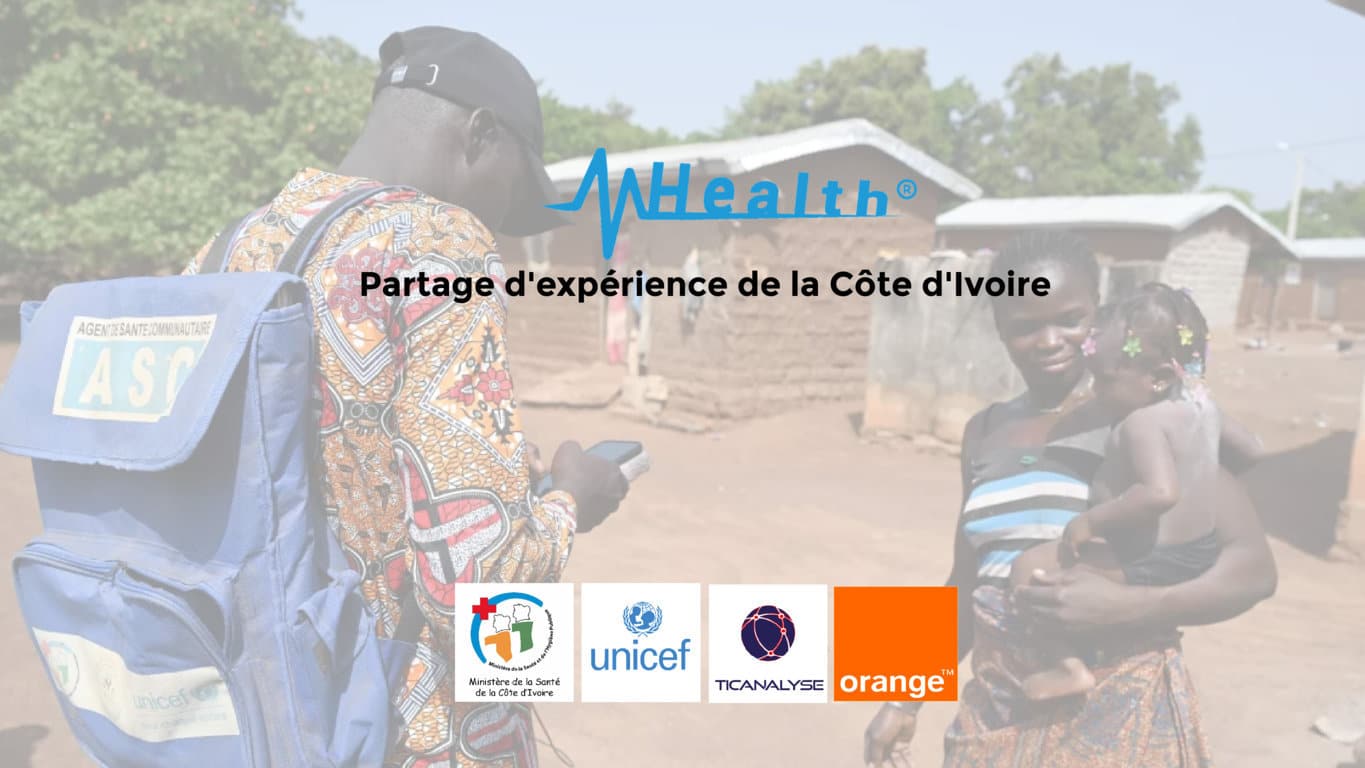
mHealth, an initiative of the Ministry of Public Health with support from UNICEF, is an innovative system based on the use of mobile phones to ensure the efficient collection and instant transmission of data on integrated management of childhood illnesses at the community level. In practice, it is an approach that improves access to healthcare for remote populations by offering curative, preventive and promotional services through community relays. In practice, mHealth will enable community relays to collect and transmit data in real time to CSI managers via mobile phone, and to send SMS alerts to CSI managers about the status of medicine stocks to avoid stock shortages, as stated by Dr Sylla Mariama on behalf of the UNICEF Representative in Niger. The launch of this mobile application service is in line with the Community-Based Management of Childhood Illness (CBCMI) mechanism, which is a national strategy designed to help reduce child and adolescent morbidity and mortality by focusing on the main causes, including malaria, diarrhoea, pneumonia and malnutrition. This approach, which aims to improve access to healthcare for remote populations by offering curative, preventive and promotional services through community relays, was introduced in Niger in 2013. Since 2016, UNICEF has supported its scaling up, and to date, 28 of Niger's 72 districts are implementing this strategy. However, despite the proven effectiveness of IMCI-c, several bottlenecks have been identified by health workers, including weaknesses in the collection and transmission of IMCI-c data and frequent stock-outs. The use of mobile phones for health (mHealth) has therefore been adopted by the Ministry of Health as one of the solutions to accelerate progress in this area, especially since only one in two people in Niger has access to basic health services due to the distance between them and the nearest health centre.
Pilot phase
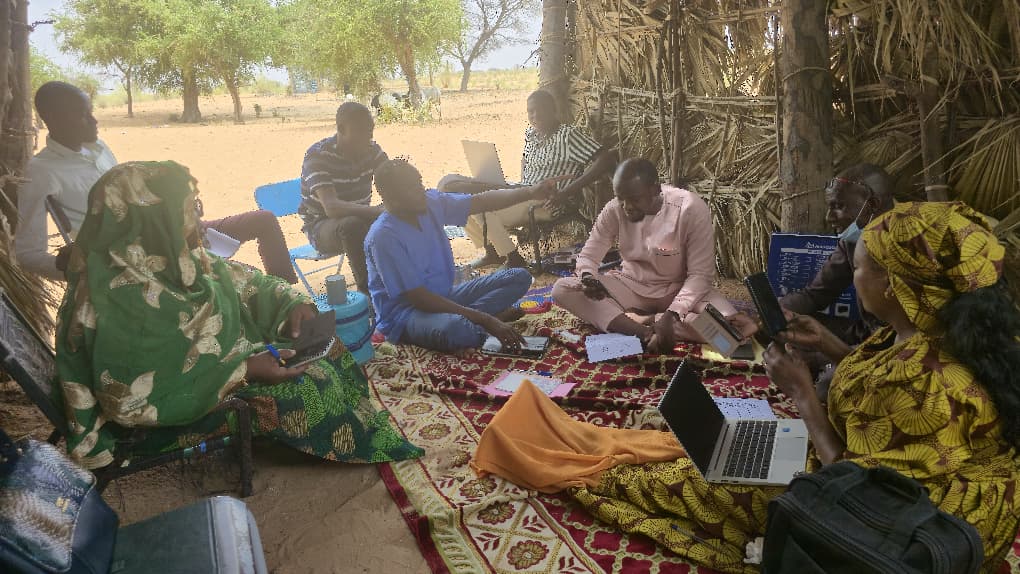
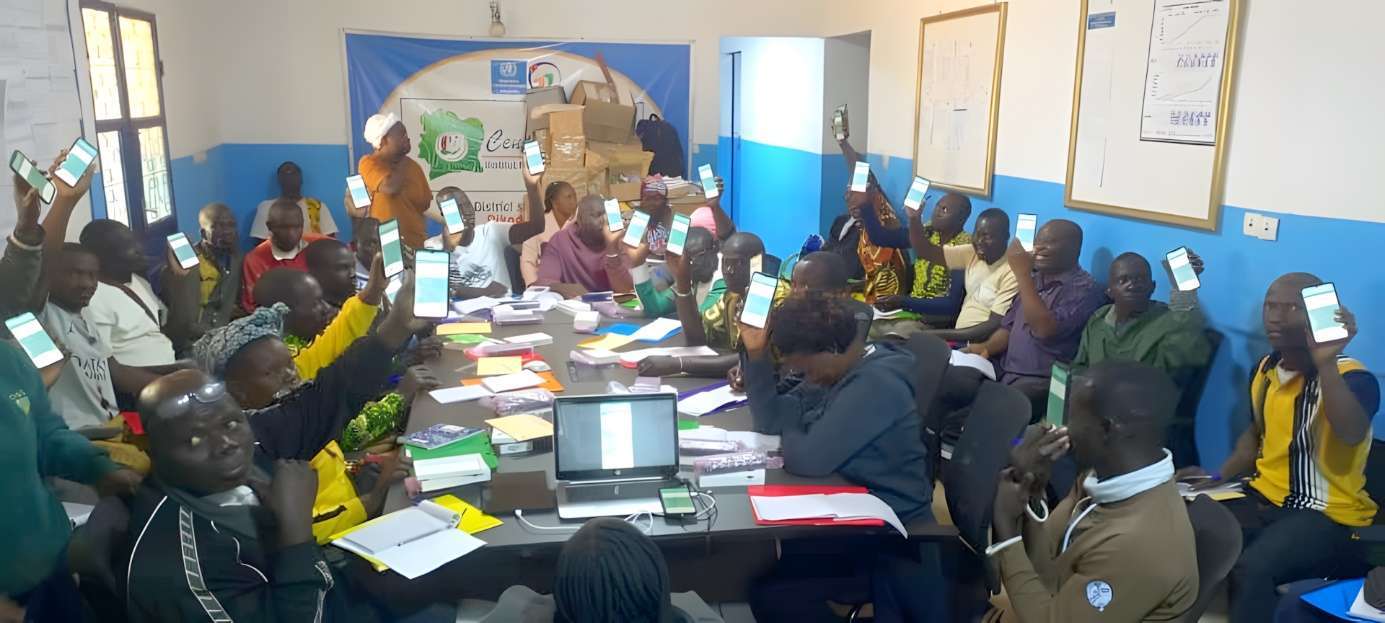
In the run-up to the launch of the initiative, 142 health and community workers were trained in the use of this technology, including around a hundred community relays, 17 heads of integrated health centres (CSIs) who train and supervise community relays, and 5 members of the Illéla district management team. According to the UNICEF representative, this pilot phase for the introduction of the mHealth initiative will cover around 165 villages located more than five kilometres from health facilities in the Tahoua region, in the three communes of the Illéla health district (Badaguichiri, Tajaé, Illéla). More than 80,000 children under the age of five will be covered by this initiative. "Only one person in two has access to basic health services in Niger, because of the distance separating them from the nearest health centre. Community relays therefore play a crucial role in bringing services closer to the population. In 2018 alone, for example, they managed to treat more than 97,000 cases of malaria, almost 100,000 cases of diarrhoea and almost 100,000 cases of pneumonia nationwide", said Dr Mariama Sylla. In the department of Illéla, Dr Mariama Sylla added that in 2018, the community relays in the three communes "treated nearly 3,000 cases of malaria, 2,500 cases of diarrhoea and 3,300 cases of pneumonia. They also screened and referred more than 500 malnourished children".
The mHealth initiative therefore comes at just the right time to address the challenges of providing effective care for sick children, especially as it has already proven its worth in countries such as Uganda, Malawi, Zambia, Rwanda and Burkina Faso. These countries have already tested the mHealth system with encouraging results in terms of stock availability, data transmission, collection and analysis – just a few weeks after the initiative was launched.
Edifying testimonies
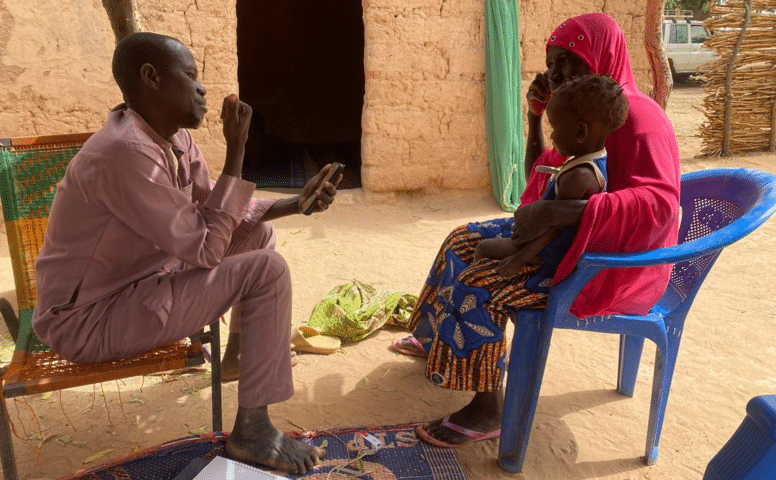
The Prefect of Ilela, Sadou Boureima, agreed, explaining that the 2018 data confirmed that the number of serious cases received by the Integrated Health Centres (IHCs) had fallen sharply, hence the importance of the curative and preventive role of community-based care under the mHealth initiative. For his part, Moussa Illiassou, the community relay of Zouraré in the department of Illéla, pointed out that "the change is clear, because previously, after writing the report, we were obliged to travel to the IHC to give it to the major, who in turn travelled to the communicator. Thanks to this technology (editor's note: the mHealth initiative), we can do this from home. As soon as we approach a certain stock-out threshold, we send out an alert using our Android phones to avoid a stock-out of medicines".
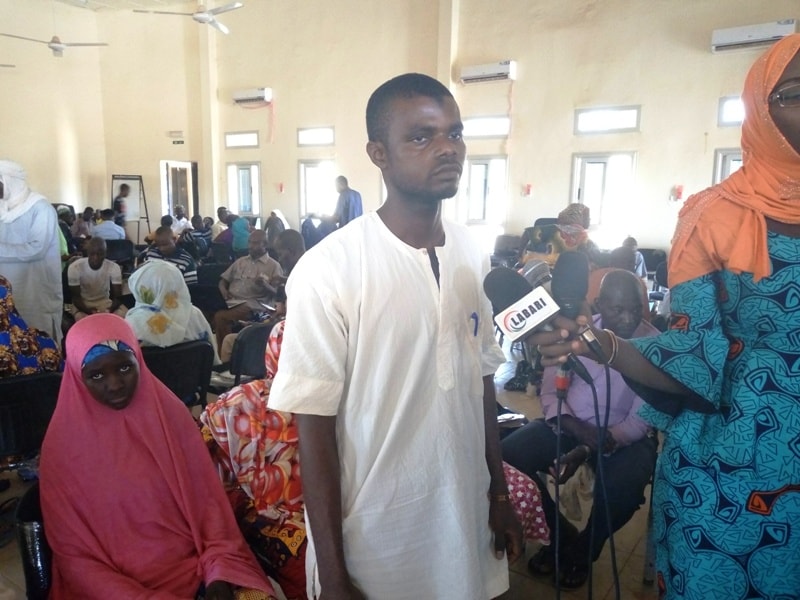
Moussa Illiassou
At the end of their training in Illéla, Zeinabou Mamane, Cheriya Zango's relay, made no secret of her satisfaction. "From now on, my report is sent directly to the Head of the CSI every week instead of every month as in the past. And if I make a mistake, the phone automatically tells me," she says with satisfaction.
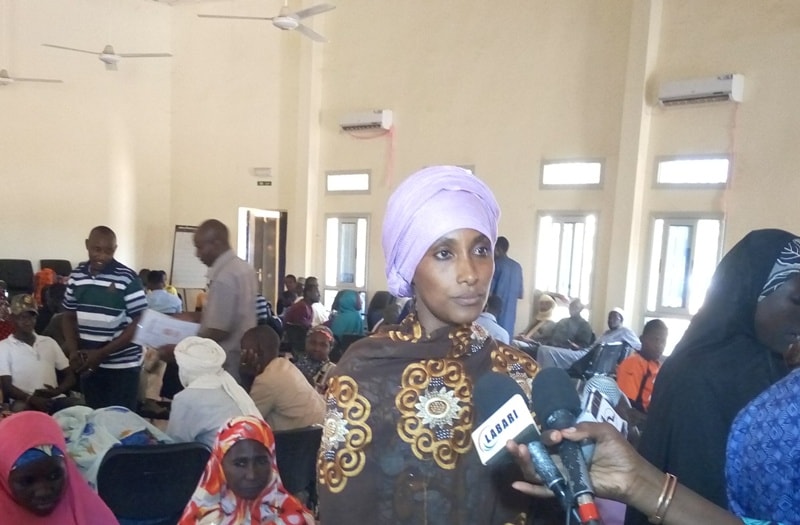
Zeinabou Mamane, relais de Cheriya Zango
Mr Zakari Aboubacar, Head of CSI Dandaji, said: "After receiving training from the trainers, we in turn trained the community relays. We taught them how to fill in information about the relay right up to registration, how to locate themselves, how to manage inputs and how to send the form. I'd like to say a big thank you to the initiators of this project, it's made a huge contribution to our work, and we'd like to see even more if possible.
With the use of mobile phones becoming more and more widespread in Niger, this solution will undoubtedly improve the care of sick children in health centres, and at the same time put technological innovation at the service of the country's socio-economic development through a strong impact in the field of public health.
Abdoulkarim Abdou MOUMOUNI (Actuniger.com)
 FR
FR  EN
EN